
Holter ECG analysis is one of the key elements of cardiac diagnostics, but in the day-to-day work of a medical practice, it can also place a significant time burden on physicians. This is especially true when the number of examinations increases and each recording requires a careful, reliable assessment.
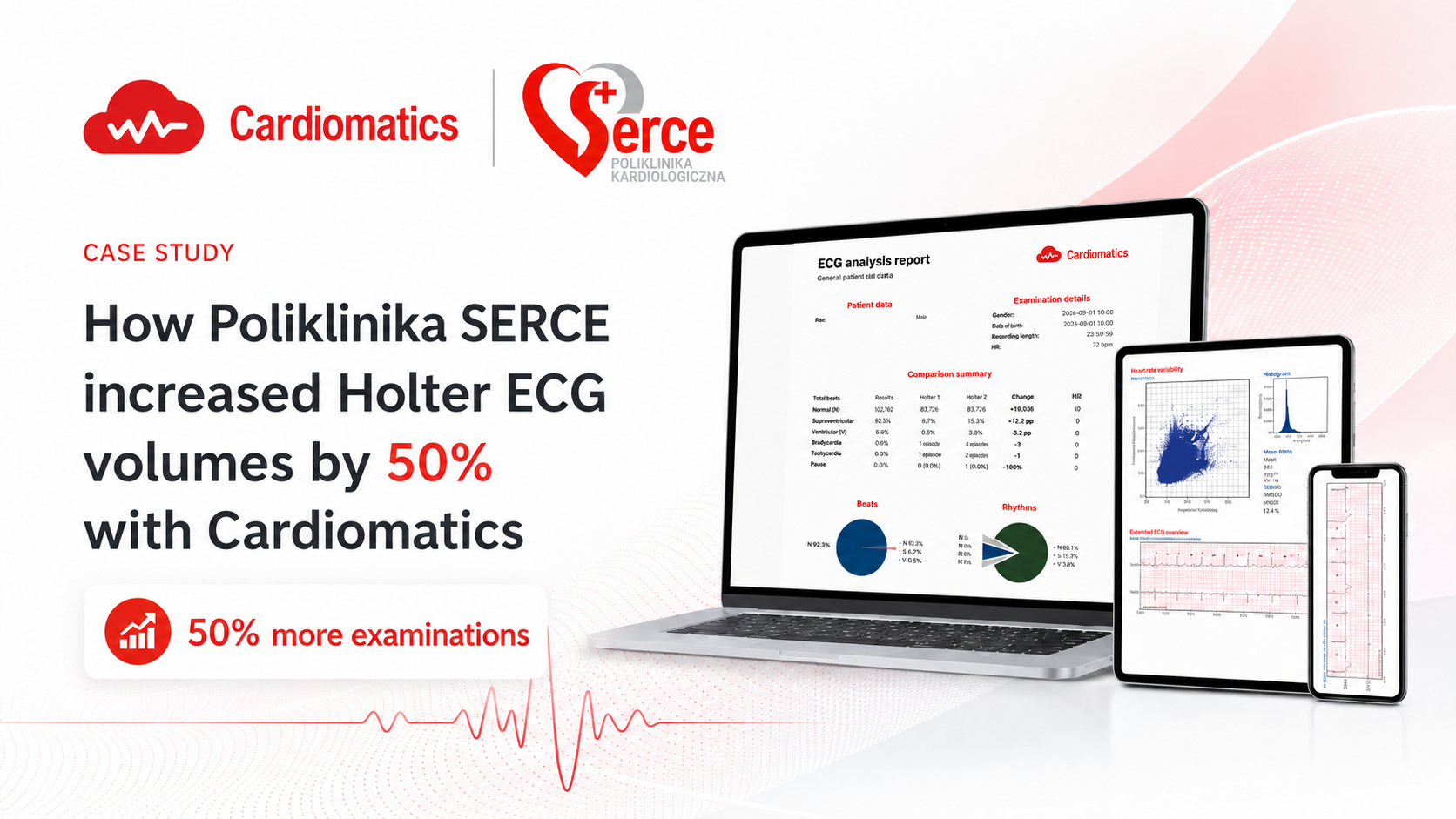
Poliklinika SERCE, a specialist outpatient care centre treating more than 40,000 patients annually, implemented Cardiomatics to streamline Holter ECG analysis, shorten diagnostic turnaround time and reduce the workload for its medical team.
About Poliklinika SERCE
Poliklinika SERCE is a medical practice specialising in cardiac care. The centre covers the full spectrum of cardiology, from routine check-ups to the diagnosis of more complex cases, where test results may influence further therapeutic decisions, including eligibility for pacemaker implantation or electrophysiology procedures.
The practice cares for more than 40,000 patients annually, has been operating for 24 years and bases its work on the experience of its team of cardiologists.
„We are satisfied with our cooperation with Cardiomatics. The collaboration works very well, we send the examinations and receive reports with completed analysis on the same day. The analyses are reliable and trustworthy. We have not observed any significant errors.”
Dr Witold Piotrowski
The challenge, time-consuming analysis and a growing number of examinations
Before implementing Cardiomatics, Holter ECG analysis was a time-consuming process for the Poliklinika SERCE team. The standard analysis of a single examination took around 30 minutes, and in more demanding cases, even more than an hour.
With a higher number of examinations, this meant an additional 3 to 4 hours of physicians’ work outside patient consultations. At the same time, growing demand for diagnostics meant that the practice had a backlog of Holter ECG analyses exceeding 100 examinations.
In practice, this created three main challenges:
- the time required to carefully analyse each examination,
- a backlog in reporting completed examinations,
- limited capacity to accept more patients without further increasing physicians’ workload.
„Previously, reliable Holter ECG analysis was very time-consuming, taking from 30 minutes to sometimes more than an hour, not counting particularly demanding cases. With a high volume of examinations, this meant many hours of work outside patient consultations.”
Dr Witold Piotrowski
The solution, Cardiomatics in the day-to-day work of the practice
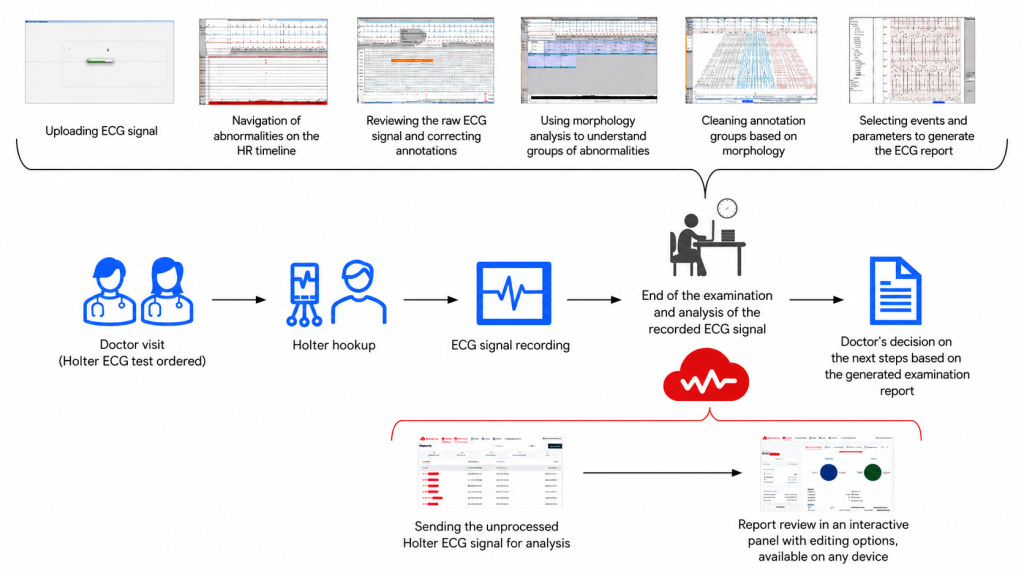
Cardiomatics is Holter ECG analysis software that helps medical practices work with ECG recordings faster and in a more structured way.
The system operates as a web application, so there is no need to install local software on a computer. The practice can send examinations for analysis and then use online reports available across different devices.
For Poliklinika SERCE, three elements were particularly important:
- easy implementation without disrupting day-to-day work,
- compatibility with the Holter ECG devices already in use,
- the ability to quickly receive ready-to-use reports with completed analysis.
Smooth implementation within one day
The implementation of Cardiomatics at Poliklinika SERCE was smooth and straightforward. The system was launched within one day, without placing any significant operational burden on the practice.
The agreement was signed and the Cardiomatics account was created on 16 May 2024. The first reports using the system were already completed on 17 May 2024.
This allowed the practice to quickly start working in a new model, without a lengthy technical implementation process and without the need to reorganise the team’s day-to-day work.
Implementation results
The implementation of Cardiomatics translated into concrete organisational and clinical results in the day-to-day work of Poliklinika SERCE.
The practice recorded:
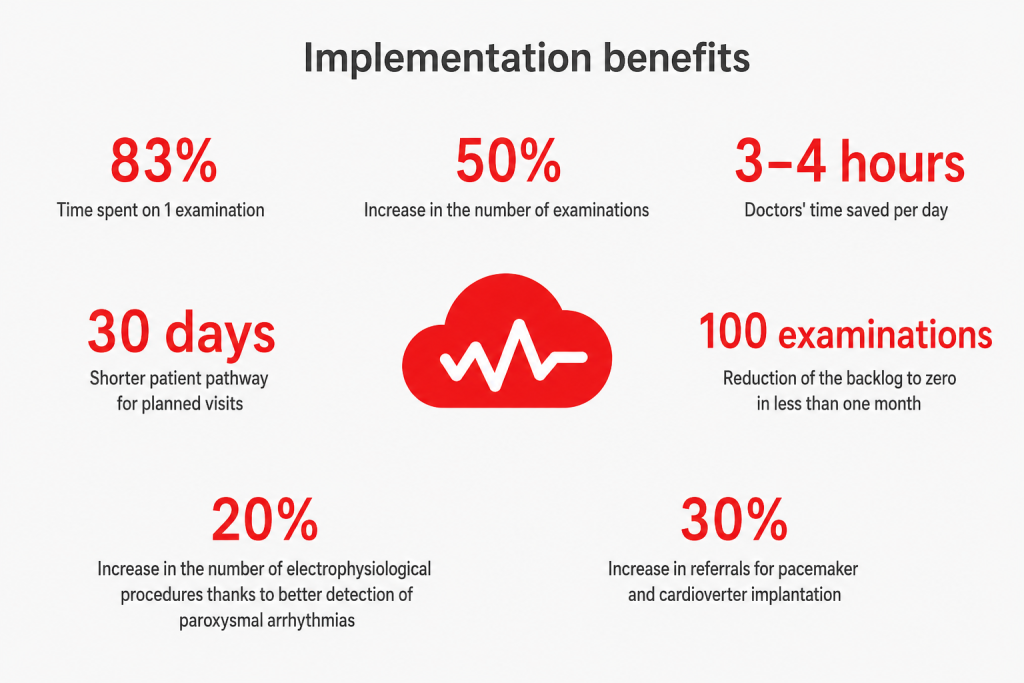
- 83% less time spent on each examination,
- a 50% increase in the number of examinations performed,
- 3 to 4 hours of physicians’ time saved each day,
- a reduction of a backlog of more than 100 examinations to zero in less than one month,
- a 30-day reduction in the patient pathway for scheduled appointments,
- a 20% increase in the number of electrophysiology procedures thanks to improved detection of paroxysmal arrhythmias,
- a 30% increase in referrals for pacemaker and cardioverter implantation.
More time for patients, less administrative work
The most important change for the practice was reducing the burden on physicians in the area of time-consuming examination analysis. With Cardiomatics, the team could move more quickly from signal recording to a ready report, while physicians could devote more attention to patients and cases requiring particular clinical assessment.
„In cardiology, time means patient safety and our credibility as physicians. Thanks to Cardiomatics, we have saved 3 to 4 hours of additional work each day, which directly translates into the quality and effectiveness of diagnostics. After a year of working together, we know that it works. We rate Cardiomatics very highly.”
Dr Witold Piotrowski