
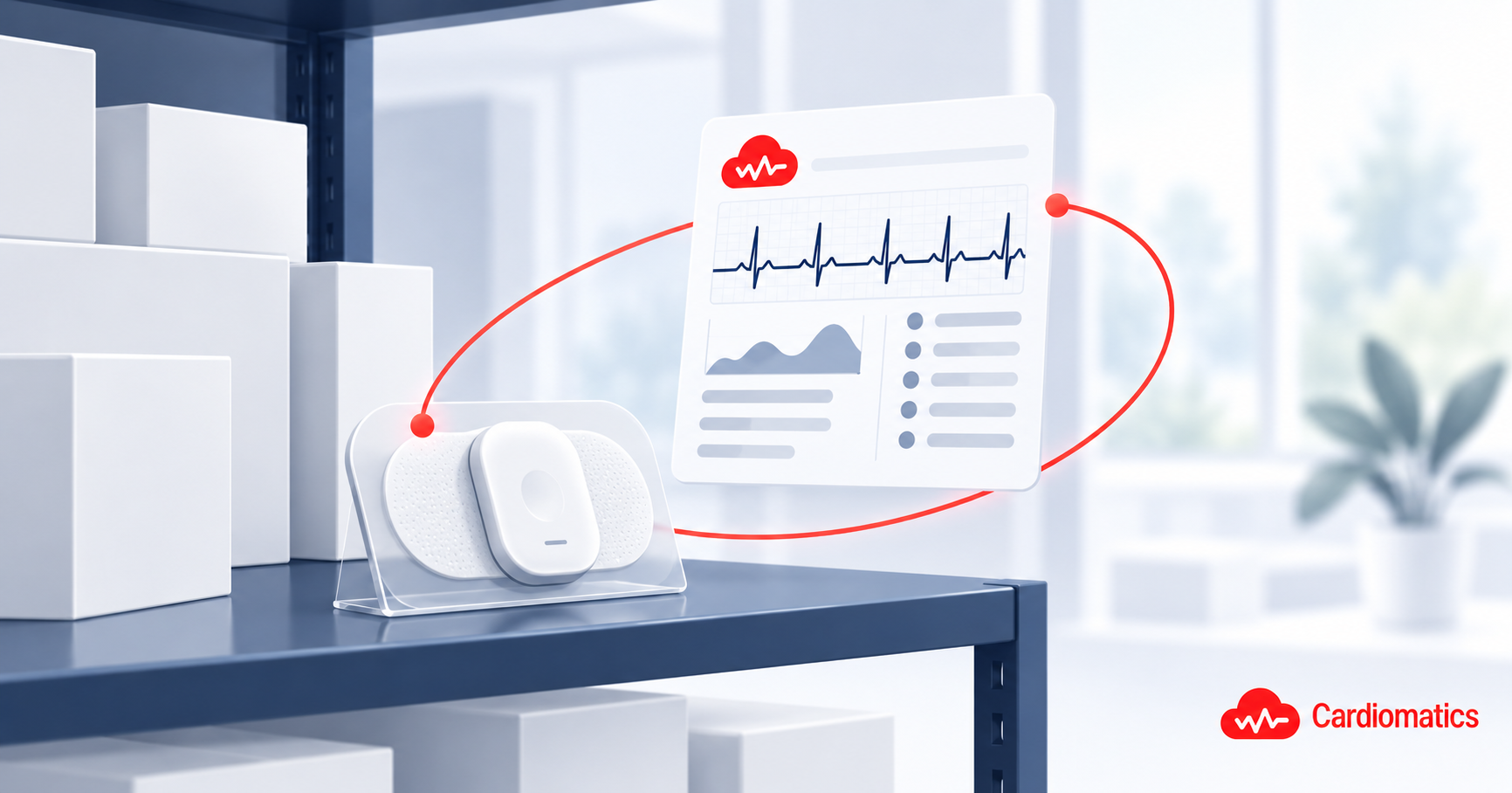
For a medical device distributor, selling a Holter monitor or a patch ECG device is usually where the relationship with a clinic ends. The device is delivered, the invoice is settled, and the next contact happens only when something breaks or when a replacement is due. Everything in between the daily use of the device, the data it produces, the clinical value it generates, stays outside the distributor’s business.
That gap is also an opportunity. A distributor’s portfolio does not have to stop at the device itself. Adding an AI-powered Holter ECG analysis layer on top of the hardware you already sell can turn a one-off transaction into an ongoing relationship, and open a source of revenue that has nothing to do with the next equipment upgrade cycle.
Where the device-only model runs out of road
Selling the device is only the first transaction in a much longer relationship the clinic has with its ECG data. Once the sale closes, a distributor typically has little reason to stay involved. The margin was made on the hardware, and unless something goes wrong, there is no natural next conversation to have with that clinic for months or years.
This creates three recurring problems for distributors who rely only on device sales. Margins on hardware are usually thin and get thinner as more suppliers offer comparable devices, so competition pushes toward price rather than value. There is no structural reason for the clinic to think of the distributor between purchases, which weakens the relationship exactly when a competitor might be trying to get in. And every year’s revenue depends on new equipment sales, with nothing carrying over from the customers already acquired.
None of this is a flaw in how distributors operate. It is simply where a device-only model stops.
The layer that changes the model: AI-assisted analysis
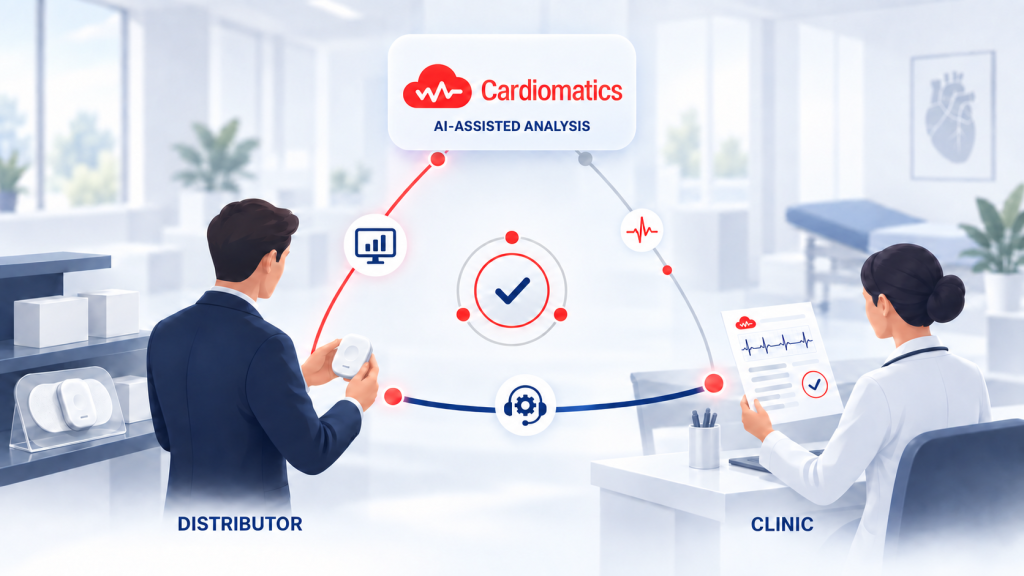
This is where a software layer on top of the device changes the picture. Instead of the Holter or patch ECG being the end point of the sale, it becomes the starting point of a service. The recording the device captures can be processed with AI-assisted analysis, producing a structured report that supports the clinician’s own review, rather than replacing it.
For the distributor, this means the device stops being a one-time product and becomes the entry point to something the clinic uses continuously. The relationship no longer ends at delivery, it continues every time a new recording needs to be processed and reported.
Cardiomatics offers more than one way to structure this partnership, depending on how a distributor wants to be involved, but the underlying idea is the same…
What this means for you as a distributor
Create recurring service revenue
Once analysis and reporting are part of what you offer, revenue no longer depends only on the next device sold. Every recording a clinic sends for processing becomes a small, repeatable transaction, and those transactions add up across your existing customer base, not just new ones.
Strengthen customer relationships
A clinic that relies on you for ongoing analysis has a reason to stay in touch between equipment purchases. Instead of resurfacing only when a device needs replacing, you become part of how they work day to day. That kind of contact is harder for a competitor to displace than a single price quote on hardware.
Expand without building your own software
Adding this layer does not mean building an in-house R&D or software team. The analysis and reporting infrastructure already exists, you extend what you offer to clinics without taking on the cost or the risk of developing it yourself.
Together, these three shifts change what a distributor’s business looks like over time. Instead of a series of separate equipment sales, you build a base of clinics that generate revenue and stay in contact continuously.
Is this the right direction for your business
This approach fits distributors who already work with cardiology clinics or hospitals and have some form of ongoing contact with them after the sale, whether through servicing, consumables, or support. It also fits distributors who want to grow revenue from the customer base they already have, rather than relying only on winning new accounts. If building or maintaining your own software is not something you want to take on, adding an existing analysis layer solves that without the investment.
It is less relevant for distributors who sell devices as a single transaction with no ongoing clinic relationship at all, since there is no existing contact point to build the service on.
Bring Holter ECG analysis and reporting into your portfolio
Adding an AI-assisted analysis layer to the devices you already sell is not a separate business, it is a natural continuation of the one you already have. It turns clinics you have already sold to into a source of ongoing revenue, and gives you a reason to stay in contact with them long after the initial sale.
If you already distribute Holter monitors or patch ECG devices and want to see how this fits into your business, explore how a Holter analysis partnership with Cardiomatics works.